
The Science Behind SynapFit®
Based on decades of scientific research and years of R&D.
How Mindeo's biophysical brain fitness approach works
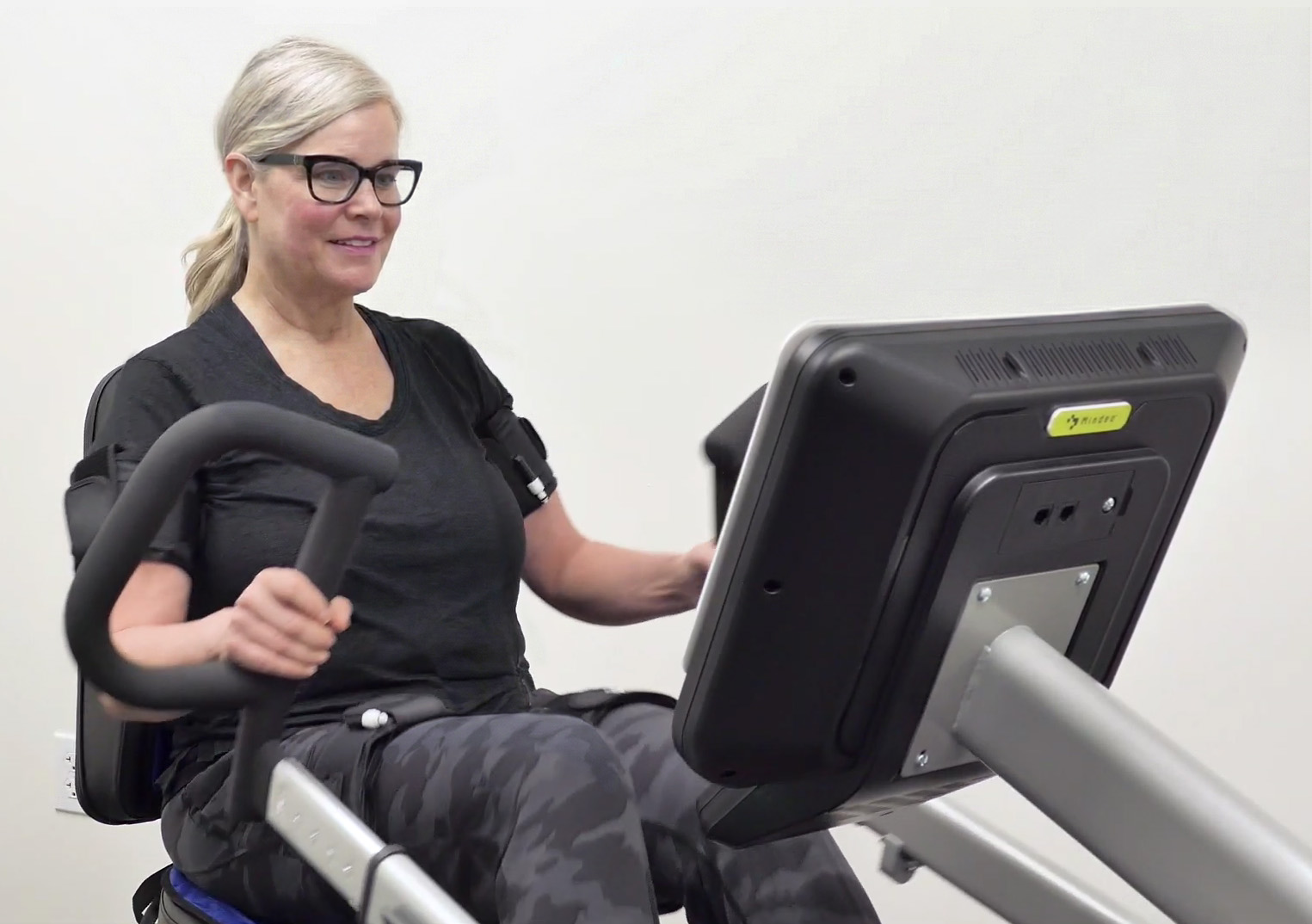
Mindeo offers the most advanced approach available. Cutting-edge research-based science is combined with the most advanced and specific tools available.
The SynapFit exercise session helps your body boost the body's responses to physical effort - triggering the biological, chemical, and physical mechanisms that research has shown naturally support benefits to the brain including cerebral blood flow and oxygenation, neurogenesis and neuroplasticity, maintaining a healthy inflammatory response, and balancing hormones - so you can focus on living your life.
Further Reading - Research Studies To Learn From
BDNF Levels
Exercise and BDNF: Regular physical activity, especially high-intensity exercise, has been shown to elevate BDNF levels, which supports neuroplasticity and cognitive function.
Reference: Ferris LT, Williams JS, Shen CL. "The effect of acute exercise on serum brain-derived neurotrophic factor levels and cognitive function." Med Sci Sports Exerc. 2007.
Growth Hormone
Exercise and Growth Hormone: High-intensity interval training (HIIT) and sprint interval exercise both increase growth hormone levels.
Reference: Godfrey RJ, Madgwick Z, Whyte GP. "The exercise-induced growth hormone response in athletes." Sports Med. 2003.
BFR and Growth Hormone: Blood flow restriction training also promotes growth hormone release.
Reference: Takarada Y, Sato Y, Ishii N. "Effects of resistance exercise combined with vascular occlusion on muscle function in athletes." Eur J Appl Physiol. 2002.
Neurogenesis
Exercise and Neurogenesis: Regular aerobic exercise enhances neurogenesis, particularly in the hippocampus.
Reference: Voss MW, Vivar C, Kramer AF, van Praag H. "Bridging animal and human models of exercise-induced brain plasticity." Trends Cogn Sci. 2013.
Cognition
Exercise and Cognition: Interval training improves executive function, attention, and memory.
Reference: Themanson JR, Pontifex MB, Hillman CH. "Fitness and action monitoring: evidence for improved cognitive flexibility in young adults." Neuroscience. 2008.
Neuroinflammation
Exercise and Inflammation: Exercise reduces neuroinflammatory markers such as TNF-α and IL-6.
Reference: Gleeson M, et al. "The anti-inflammatory effects of exercise: mechanisms and implications for the prevention and treatment of disease." Nat Rev Immunol. 2011.
Brain Health
Exercise and Brain Health: Cardiovascular exercise is associated with improved brain health and cognitive function in older adults.
Reference: Erickson KI, et al. "Exercise training increases size of hippocampus and improves memory." Proc Natl Acad Sci U S A. 2011.
Dementia Risk
Exercise and Dementia Risk: Regular exercise reduces the risk of cognitive decline and dementia.
Reference: Hamer M, Chida Y. "Physical activity and risk of neurodegenerative disease: a systematic review of prospective evidence." Psychol Med. 2009.
Testosterone Levels
Exercise and Testosterone: Sprint intervals and high-intensity exercise boost testosterone levels.
Reference: Kraemer WJ, et al. "Changes in hormonal concentrations following different heavy-resistance exercise protocols in women." J Appl Physiol. 1993.
Red Light Therapy and Testosterone: Red light therapy may stimulate testosterone production.
Reference: Hamblin MR. "Mechanisms and mitochondrial redox signaling in photobiomodulation." Photochem Photobiol. 2018.
Cortisol Levels
Exercise and Cortisol: High-intensity exercise initially increases cortisol, but chronic training can reduce resting cortisol levels.
Reference: Hill EE, Zack E, Battaglini C, et al. "Exercise and circulating cortisol levels: the intensity threshold effect." J Endocrinol Invest. 2008.
Other Hormones (Insulin Sensitivity, IGF-1)
Exercise and Insulin Sensitivity: HIIT is effective at improving insulin sensitivity.
Reference: Babraj JA, Vollaard NB, Keast C, et al. "Extremely short duration high-intensity interval training substantially improves insulin action in young healthy males." BMC Endocr Disord. 2009.
IGF-1 and Exercise: Interval exercise increases IGF-1 levels, which supports tissue repair and growth.
Reference: Avazpour S, et al. “The Effect of Two Types of High-Intensity Interval Training on Serum Value of GH and IGF-1 in Overweight Nurses.” Asian Journal of Sports Medicine. 2020
Sleep
Exercise and Sleep: Regular aerobic and high-intensity exercise improves sleep quality and duration.
Reference: Kredlow MA, Capozzoli MC, Hearon BA, et al. "The effects of physical activity on sleep: a meta-analytic review." J Behav Med. 2015.
Red Light Therapy and Sleep: Red light therapy can promote melatonin production and improve sleep onset.
Reference: Figueiro MG, Rea MS. "Short-wavelength light enhances alertness and performance during the daytime." Physiol Behav. 2010.
Mitochondrial Function
Exercise and Mitochondrial Biogenesis: High-intensity interval training enhances mitochondrial function.
Reference: Gibala MJ, et al. "Physiological adaptations to low-volume, high-intensity interval training in health and disease." J Physiol. 2012.
Red Light Therapy and Mitochondria: RLT enhances mitochondrial activity and ATP production.
Reference: Karu TI. "Mitochondrial signaling in mammalian cells activated by red and near-IR radiation." Photochem Photobiol. 2008.
VO₂ Max
HIIT and VO₂ Max: Sprint intervals are highly effective at improving VO₂ max.
Reference: Wisløff U, et al. "Superior cardiovascular effect of aerobic interval training versus moderate continuous training in heart failure patients: a randomized study." Circulation. 2007.
Muscle Hypertrophy and Strength
BFR and Muscle Growth: BFR training stimulates muscle hypertrophy and strength gains.
Reference: Loenneke JP, et al. "Low intensity blood flow restriction training: a meta-analysis" J Appl Physiol. 2012.
Endothelial Function
Exercise and Endothelial Health: High-intensity exercise improves endothelial function and nitric oxide production.
Reference: Green DJ, Maiorana A, O'Driscoll G, Taylor R. "Effect of exercise training on endothelium-derived nitric oxide function in humans." J Physiol. 2004.
Blood Pressure
Exercise and Blood Pressure: HIIT reduces blood pressure in hypertensive patients.
Reference: Li L, Liu X, Shen F, Xu N, Li Y, Xu K, Li J, Liu Y. “Effects of high-intensity interval training versus moderate-intensity continuous training on blood pressure in patients with hypertension: A meta-analysis.” Medicine 2022
Insulin Sensitivity and Blood Glucose Control
Exercise and Glucose Control: High-intensity interval training improves insulin sensitivity and lowers blood glucose levels.
Reference: Little JP, et al. "A practical model of low-volume high-intensity interval training induces mitochondrial biogenesis in human skeletal muscle: potential mechanisms." J Physiol. 2010.
Fat Loss and Body Composition
HIIT and Fat Loss: Sprint intervals are effective at reducing body fat and improving lean body mass.
Reference: Trapp EG, et al. "The effects of high-intensity intermittent exercise training on fat loss and fasting insulin levels of young women." Int J Obes (Lond). 2008.
Injury Recovery and Tissue Repair
Red Light Therapy for Recovery: Red light therapy promotes tissue repair and reduces muscle soreness.
Reference: Leal-Junior EC, et al. "Effect of phototherapy (low-level laser therapy and light-emitting diode therapy) on exercise performance and markers of exercise recovery: a systematic review with meta-analysis." Lasers Med Sci. 2015.
Immune Function
Exercise and Immune Health: Regular moderate-to-intense exercise improves immune function.
Reference: Nieman DC, Wentz LM. "The compelling link between physical activity and the body's defense system." J Sport Health Sci. 2019.
Skin Health and Collagen Production
Red Light Therapy for Skin Health: Red light is absorbed by mitochondria in skin cells, stimulating energy production and cellular repair processes
Reference: Umino Y, Denda M. “Effect of red light on epidermal proliferation and mitochondrial activity.” Skin Res Technol. 2023
Oxidative Stress and Antioxidant Levels
Exercise and antioxidants: Regular exercise can enhance the body's antioxidant defenses and reduce oxidative stress over time.
Reference: Ye Y, et al. “The Effects of Aerobic Exercise on Oxidative Stress in Older Adults: A Systematic Review and Meta-Analsis.” Front. Physiol. 2021